For decades, buying a starter-home was a building block of home ownership. First-time buyers would follow a cycle somewhat resembling this:
-
Buy a small home
-
Rapid appreciation built equity in the home
-
Sell after 3-5 years to move "up" into a more expensive home
-
Rinse and repeat as necesseary
Since 2022 though, Canadian home prices have started to soften. Rapid appreciation can no longer be assumed and in fact, we've actually seen home prices decline across many Canadian markets. The result is homeowners have delayed selling their home and plan to stay put longer to avoid selling at a loss.
So this begs the question, are starter homes still worth it? In fact, were they ever worth it?
If you ask first-time buyers of 2017 who saw the values of their home increase by over 38% by 2022 they would certainly tell you it was. But similar to depending on market returns, depending on your home appreciating a certain amount in a short-term period to accumulate wealth is a risky plan.
Then, when you also take into account the high costs of moving and the amount of change that comes in your life during your 20s and 30s, you start to realize how much can go wrong with a plan built around the housing market.
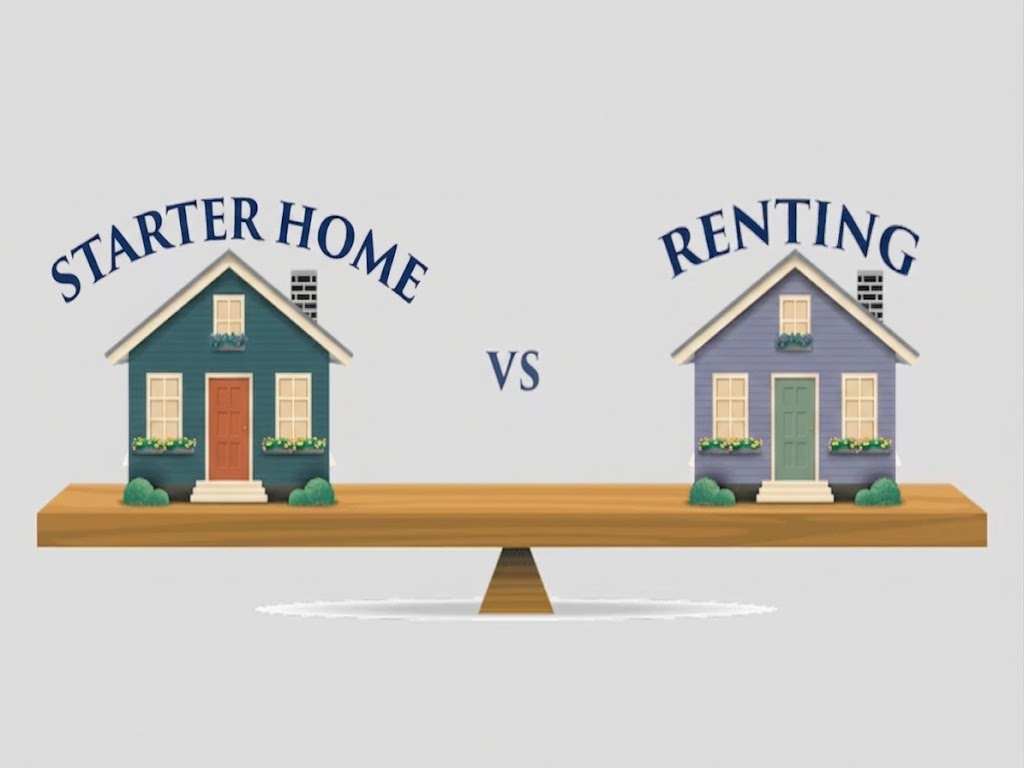
Now I certainly do believe it is financially beneficial to be a homeowner, that's not what this article is about. The purpose of this article is to see whether it's worth buying when you're young and still have a small net worth, versus holding off and renting until you've become more established in both your life and career and can say "I can see myself raising a family here."
Let's start by seeing what the numbers say.
The Math of a Starter Home
For us to break this down purely from a financial perspective, the easiest way to do so will be through an example.
Let's say you are a single 25-year old looking to buy a starter home. At 25 your income is still relatively low and are in the early stages of building wealth, so let's assume you can only afford to buy a $450,000 house. Here's a breakdown of all the other 'hidden expenses' of home buying on top of the purchase price, assuming a down payment of 5%.
Extra Costs | |
|---|---|
Land Transfer Tax - Ontario | $1,475 |
CMHC Fees (Mortgage Default Insurance) | $17,100 |
Legal Fees (varies) | $1,500 |
Title Insurance | $300 |
Appraisal Fee (from mortgage company) | $350 |
Home Inspection | $750 |
Paint/Furniture/Curtains, etc. | $2,500 |
Moving Costs | $500 |
Total | $24,475 |
Keep in mind, you're only looking to stay here a few years, at which point you assume your house will have appreciated enough in value for you to make a profit off the sale. That, combined with what presumably will be a larger income, you can in theory, afford a larger home you see yourself staying in longer term.
So, essentially we need the value of your home to be worth more than $474,475 to earn a profit. You might look at that number and think that's not too bad, and on paper you'd be right. We only need the value to increase 5.4% for that to happen.
The problem is we haven't factored in your selling costs yet.
So let's say over 3 years, the value of your home appreciates 10% and is now worth $495,000. You're able to sell it for that amount and you come out of it with a $45,000 tax-free profit (we'll account for the buying costs in the table below). Let's see how much of that is left after accounting for selling expenses.
Sale for $495,000 | |
|---|---|
Gain on Sale | $45,000 |
Real Estate Commission 5% plus HST | ($27,968) |
Legal Fees | ($1,500) |
Mortgage Cancellation Fees | ($5,000) |
Mortgage Discharge Fees | ($200) |
Moving Costs | ($500) |
Profit on Sale | $9,832 |
Costs When You Bought | ($24,475) |
Remaining Profit/(Loss) | ($14,643) |
As you can see, nothing is left, and you're actually left with a loss of over $14,000.
Moving costs are something a lot of people overlook when buying a home. So much of the attention just goes to the purchase price when in reality, these other charges add up and can quickly change what looked like a good financial decision to a poor one.
Of course, this all comes down to where you're buying (which will determine how fast the property can rise in value) and how long you intend to stay in the house. Home prices are tough to predict and if you're not flexible with how long you plan to stay in the house, betting on it to go up within a certain timeframe is a gamble.
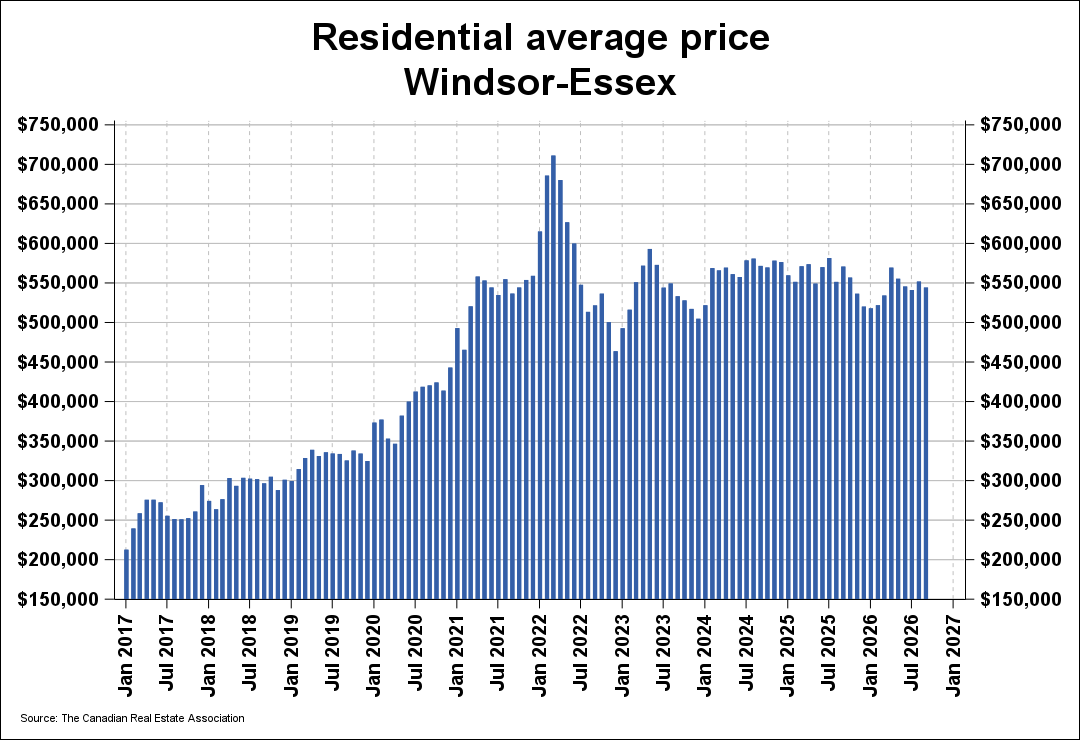
Just look at average home prices alone here in Windsor-Essex over the last 3 years. From July 2023-July 2026, home prices in Windsor-Essex have dropped approximately 9.5%. In other words, either you're not moving out anytime soon or you're forced to incur a significant loss.
Buying and selling costs are just one part of the equation though. Let's take a look at the "big picture" of your finances if you choose to rent until you find your forever home.
What if You Rented Instead?
Let's compare your financial situation 5 years from now if you decide to rent and then buy a home you plan to stay in long-term, versus purchasing a starting home now then moving up into a forever home 5 years later.
We'll examine taking the starter home route first.
Using the same example as above of a $450,000 mortgage and assuming an interest rate of 4%, your monthly mortgage payments are about $2,300 over 25 years. If your current income is $85,000 and your other monthly expenses total up to $2,000, you can afford to save approximately $1,200 per month.
5 years pass and you find your forever home, priced at $700,000, so you decide to sell. Assuming a conservative average annual return on your investments of 6%, your portfolio will now be worth around $88,000. Your home value, like in the previous example, is now worth $495,000 - a 10% increase.
You sell the house and after accounting for the outstanding amount on the mortgage as well as selling costs, the proceeds from the sale come out to approximately $127,000. The remaining $573,000 you take out as another 25-year mortgage at 4%, leading to monthly payments of $3,050 per month.
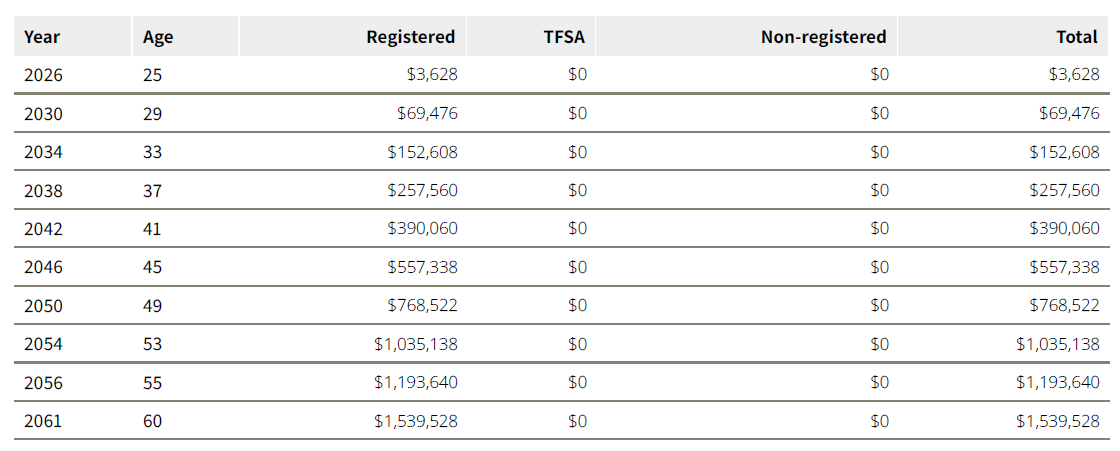
Fast forward to your retirement at 60. Your house is now paid off, your income has continued to increase and like the responsible individual you are, you've increased your savings rate proportionally. At retirement, your investment portfolio will be worth approximately $1.54 million.
Let's look at what your portfolio could've been worth had you rented longer instead.
We will use the exact same assumptions as before, the only difference will be how much you save. Let's say your rent is $1,000 per month. That additional $1,300 monthly you're saving by not having a mortgage, you also invest. So, from age 25 to 30, you're saving $2,300 per month instead.
At 30, you find your forever home priced at the same $700,000 and decide you're ready to buy. At this point, using the same 6% average annual return, your portfolio is worth approximately $150,000. Using your First Home Savings Account and Home Buyers' Plan, you put a $75,000 down payment on the house and take on a mortgage for the remaining $625,000. In this situation, using the same 25-year amortization period and 4% rate, your mortgage payments will be about $3,200 per month.
When they retire at 60, let's see what their portfolio is worth...
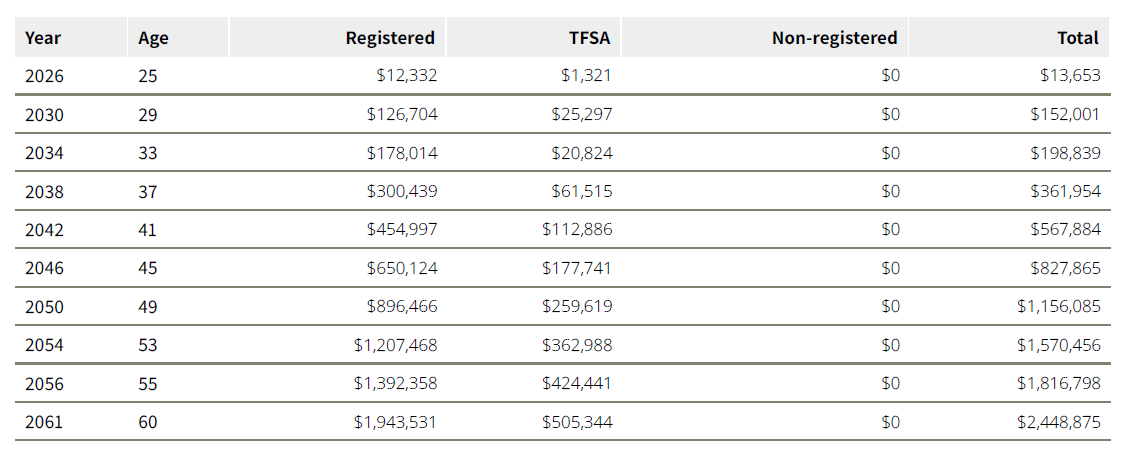
$2.45 million.
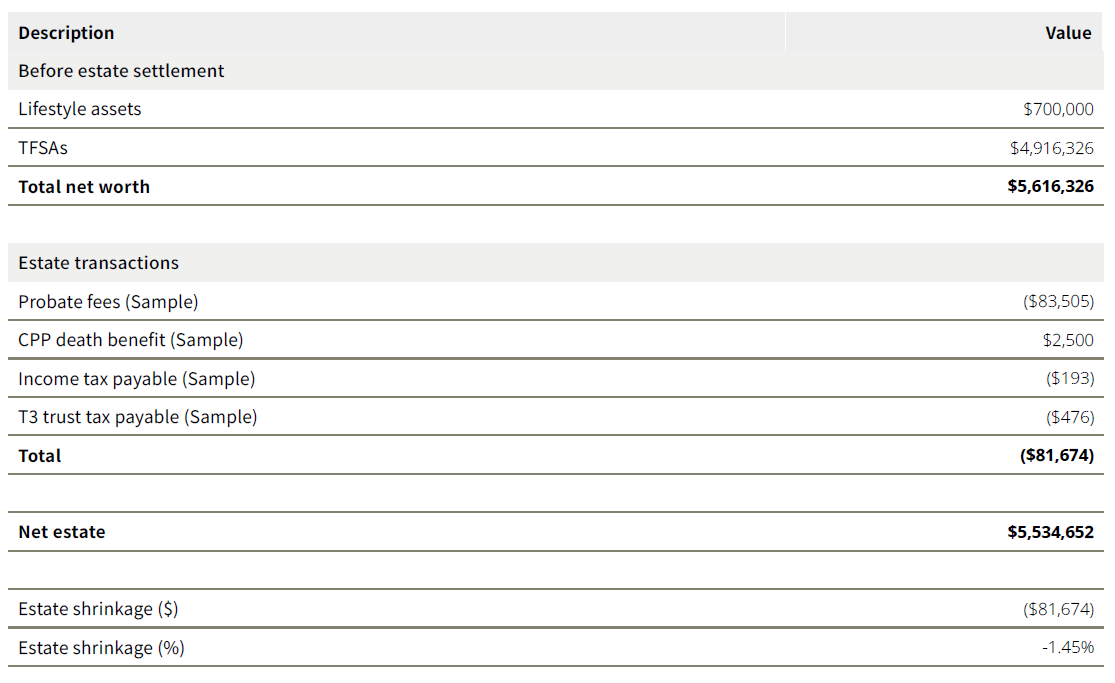
Let's take it a step further. Maybe one of the things that's really important to you is leaving behind a sizable legacy for your children and grandchildren. Obviously we won't consider how much your home is worth at retirement, because this will cancel out across the two examples. Purely from the additional years for your investment to compound, plus the same $700,000 you bought your house for, your estate would be worth $6.73 million.
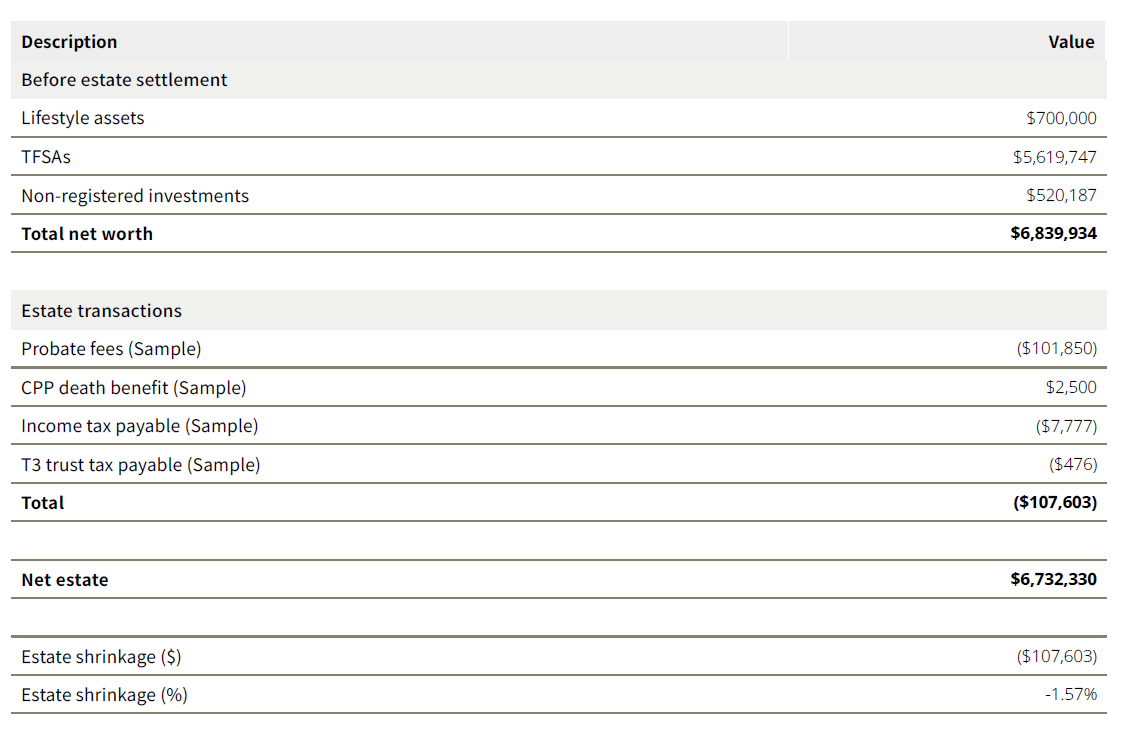
If you went the starter home route instead, you leave behind $5.53 million.
Obviously this is a very simplified example, but here's the facts: from 1984-2014, Canadian stocks returned on average 8.5%. Over that same period, home prices increased an average of 5.5%. And keep in mind, in this example we assumed your portfolio returns were only 6%! If we used the actual average of 8.5% the discrepancy would be even larger.
Remember this, history tells us you will be wealthier if your investments are your main wealth builder, not the equity in your home.
For most people, their home is their largest asset, and that's probably a big reason why there aren't more wealthy people. They go out and stretch themselves thin on a house and renovations and because of it, have to cut back on their investments which would make them more money. Ask any wealthy person and I can guarantee almost ALL of them will say their home is not their largest asset.
The earlier you realize this and invest more of your income that otherwise would be tied up in your house, the more you will benefit from this fact since your money has more time to compound and in turn, the wealthier you'll become.
Other Factors To Consider
Aside from the math, there are other qualitative factors to consider that may not justify purchasing a starter home. All of which stem from how much change typically comes from this stage of your life.
Think about this: take the same 25-year old from our example. He's just a few years into his profession and went ahead with purchasing a starter home that he only planned to live in for 3 years. Let's say a 6 months after moving in, he's offered a significant promotion, but he has to move across the country.
It's safe to say he would likely take it, but it's extremely unlikely his house has appreciated over that period of time to not incur a significant financial loss. Especially if he has to move to a larger city like Vancouver or Toronto.
Same thing can happen with relationships. If you're not in one when you buy a home and end up meeting someone who lives elsewhere, depending on the situation you might be the one who needs to move.
Your 20s and 30s are your years where you figure out what you want the rest of your life to look like. For many people your life will look vastly different at 30 than it will at 25. You lose a lot of this flexibility if you're tied down by a house at a young age.
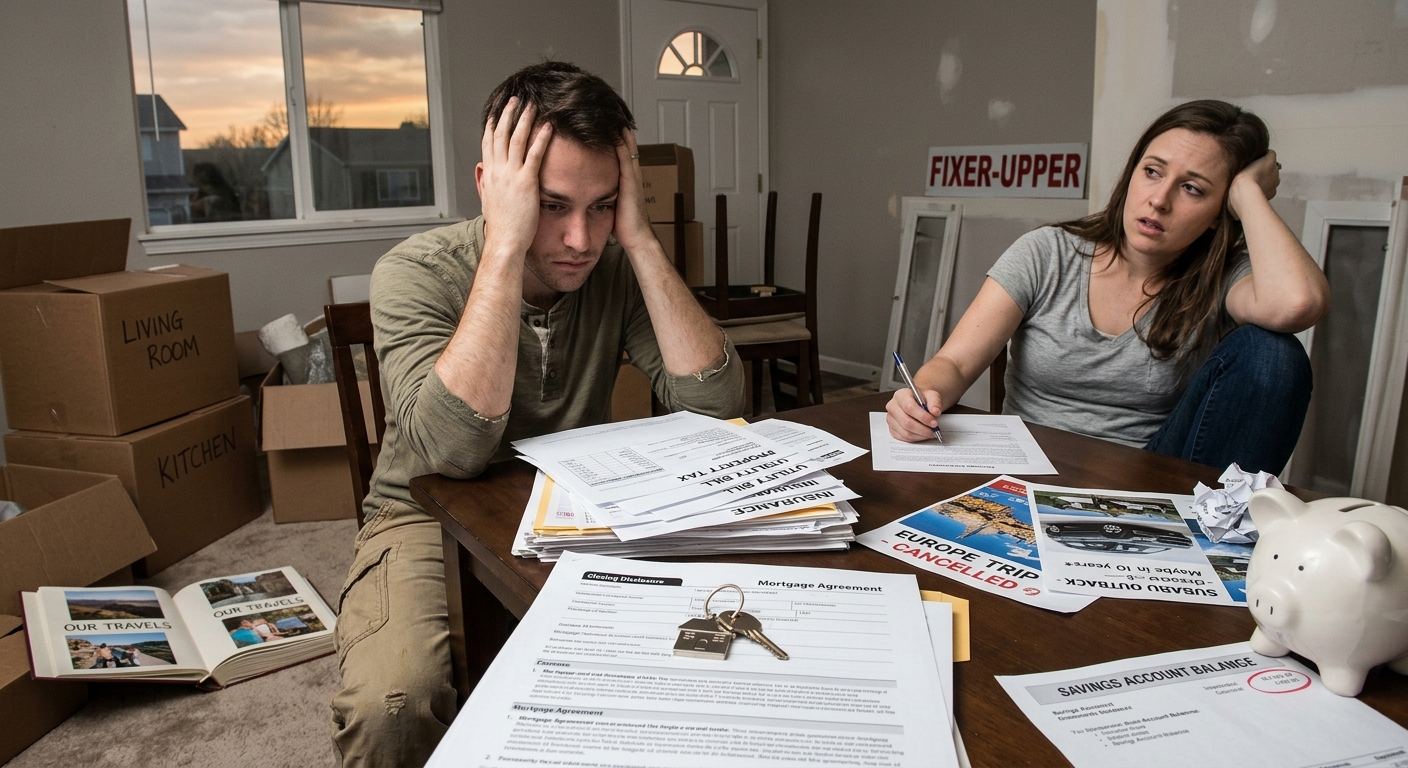
Then what if your starter home is a bit of a fixer-upper and needs some renovations? Or what if a year after buying an unexpected home repair comes up that costs you $10,000? When you're early in your career and have a lower income and less assets to your name, all the costs that come with home ownership can strain you and make it significantly harder to build wealth.
Want to know why renting is awesome? Because it offers a solution to every one of these issues! If you don't like where you live or if you need to move to a different city for work or a relationship, renting gives you all the freedom in the world. You don't have to deal with the high costs of selling and buying that come with houses, plus you avoid the risk of your home taking months to sell.
And if any unexpected repairs come up, your landlord takes care of it. No need to take a big chunk out of your emergency savings nor will it won't affect your ability to save.
For some reason, I find a lot of young adults are so down on renting and want to move into a house as soon as they can. But it seems to me that, for most young people who are still figuring out their life, renting is the perfect option.
I hope in all of this, the sentiment doesn't get lost that I do believe home ownership over the long-term is more financially beneficial over renting.
I look at it this way, the purpose of your house should be what it was always meant to be: a home, a place to settle down in, and where you will raise your family. Not an investment.
When you buy a home with that intention, your home can still prove to be a great investment. It has much more time to appreciate in value, but you're not dependent on it. And when you have no plans to move anytime soon, things like renovations can be stretched out over a longer time frame. These can be performed periodically over the stretch of multiple years to prevent you from ending up in a financial squeeze and being forced to pull back on your investments.
That narrative completely flips if you're constricted to a shorter time-frame.
So if you're young, this is what I'd recommend: save most of your income, like, as much as you can. Continue to rent until you're more established in your career and are ready to start a family. Then, when you've built up a sizable portfolio and find a home you don't see yourself leaving anytime soon, then you buy (of course, assuming you can comfortably afford it).
At that point your investments have had enough time to grow for compounding to REALLY work its magic and you'll be on the fast track to wealth as long as you continue living below your means. You'll be in a house that you can call home and whether it goes up or down in value it will make no difference to you.
And if it does go up significantly in value, well, that's just the cherry on top.
I hope the content of this article was helpful! If you are able to take even just one or two insights from it, I’d consider it a success.
I love helping young professionals, whether they choose to work with me or not (hence why I write these articles). Another way I’m trying to help and reach as many young adults as I can is through my email list.
When you join my list, you will receive weekly emails tailored to young professionals who are serious about reaching their financial goals. As a young professional myself, I dedicate most of my life to learning about proper money management and wealth accumulation strategies. My goal for these emails is to pass that knowledge on to you. They don’t look the prettiest, but I believe the content within them will be of immense value to you.
When you sign up, you will also immediately receive a free 15-page financial playbook, written by me, called “7 Financial Moves Everyone Should (and Shouldn’t) Do Before 30”.
To signup and receive your free PDF, click here.
Aside from that, I also post regularly on LinkedIn. You can check out my profile here.
If you’re interested in reading another article, click here. I make sure to write a couple new ones each month so stay tuned for those.
If you’re interested in learning more about my story and why I’m so passionate about helping young professionals, scroll slightly further down to the “About the Author” section and click “Read my full story”.
Alright that’s all for now. Hope to see you here again soon!