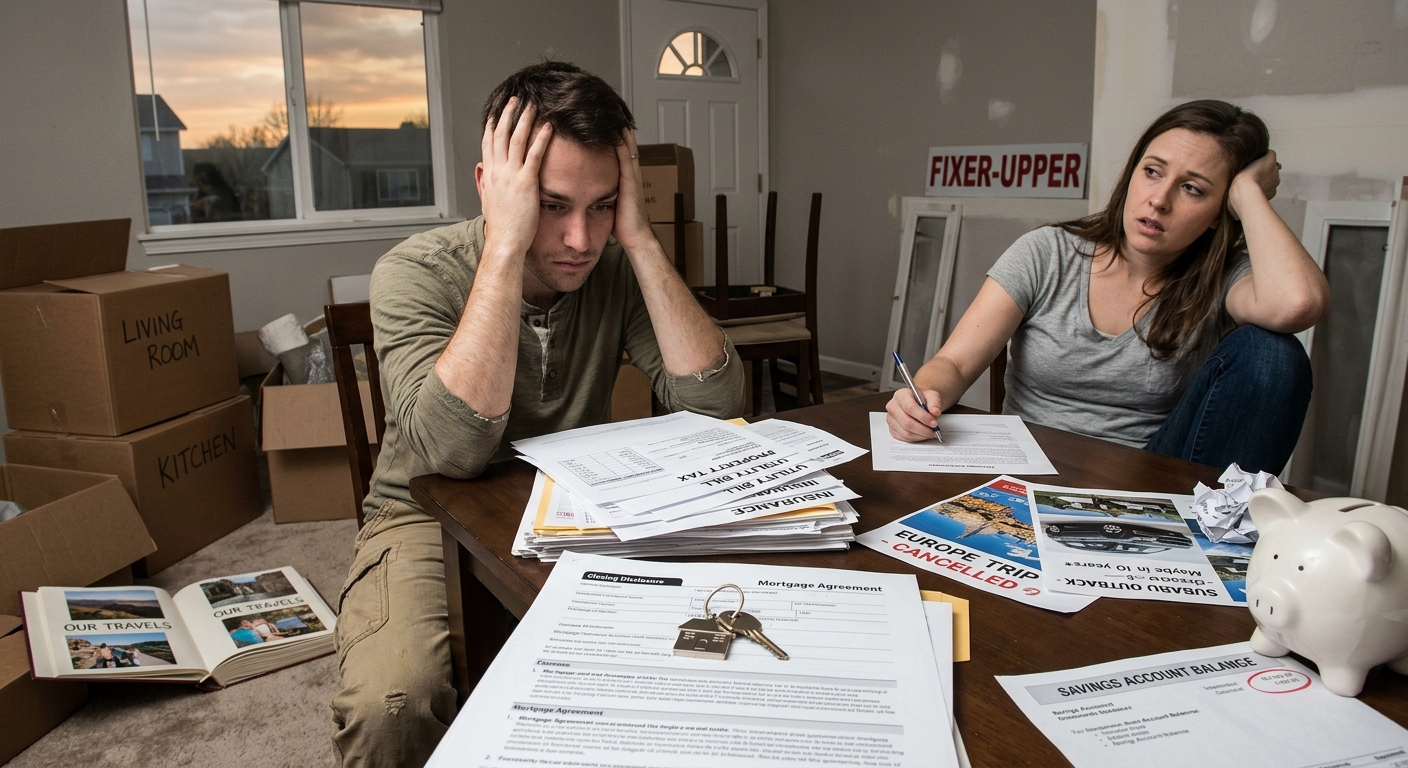
I recently wrote a post on LinkedIn about a mistake a couple in the GTA made when buying a home (which I'll briefly summarize later in this article if you missed it), and I got a message from a guy in his late 20s who was getting ready to buy his first home and had a few questions about mortgages.
I figured if one person is asking these questions, there's likely many others wondering the same thing. So, I decided to put together a guide to the home-buying process from start to finish.
Buying a home is one of the biggest financial decisions you'll ever make. Between mortgages, down payments, conditions, closing costs, and the long-term impact a home can have on your financial future, there's a lot more to consider than simply finding a place you like. And even then, this article is only scratching the surface.
Not to mention, making the right choice as a first time buyer when choosing a house has maybe never been more important than it is today. We all know how insane the housing market is and how tough it is to get into.
If you're feeling behind because you haven't bought a home yet, you're certainly not alone. The average age for the first-time homebuyer in Canada is now 36 years old. In Toronto it's 40.
But at least we can all breathe a sigh of relief that we don't live in Vancouver - it's 46 years there.
The reality is that most people will spend years saving for their first home. So when the time finally comes to buy, the goal isn't just to get into the market — it's to make a decision you'll feel good about years from now.
In this article, I'll walk you through the five key steps of buying a home and share a few practical tips along the way that I think every first-time buyer should know.
Let's get into it.
Step One: Familiarize Yourself with the Neighbourhood You're Interested In
This kind of goes without saying, but the main reason for it might not be what you think.
When you're browsing realtor.ca, you're naturally looking for houses that check your boxes. Maybe you want a 2-car garage, a finished basement, or enough space that you don't have to hear your neighbour sneeze through the wall. You're also probably trying to gauge the range of prices of homes in the area.
But there's another factor that's just as important: future resale value. It's the idea of thinking like an investor while shopping for a home.
If you're a first-time buyer, there's a good chance this won't be your forever home. In fact, on average, Canadians buy 3-5 homes in their lifetime. This means that when choosing a house, you should also consider how it can be a stepping stone to the next one. Throughout the home browsing process, you should ask yourself "Will other people want to live here five or ten years from now?"
So how do we know which houses are more likely to have greater price appreciation? It comes down to basic supply and demand, where there is more demand, property values are more likely to rise.
You probably already know what most buyers value: areas with good schools, reasonable commutes, nearby amenities, and strong community appeal.
The type of house you choose also generally plays a factor. For example, a townhouse usually goes up in value faster than an apartment, while a semi-detached usually goes up in value faster than a townhouse, and a single-family home usually goes up in value faster than a semi-detached.
Here's another tip on that note, if you're looking to use your home as an investment vehicle, I'd recommend against buying a unique looking property. Remember, as much as you might like it, it's demand that drives prices up, and not everybody is going to like houses that look like this:

Lean towards houses located in a desirable neighbourhood that has a broad appeal to future buyers. If you choose a "good" house in a "good" neighbourhood that isn't the most expensive, it's a pretty safe bet your house will grow in value.
Remember, this home is likely just one stop on your homeownership journey. The more equity you can build in this property, the easier it may be to move into your dream home down the road.
Step Two: Get a Good Real Estate Agent
I know it may be tempting to go with one of your buddies who became a real estate agent right out of college, but this is one area where experience really matters. I would HIGHLY recommend going with one that has at least 10 years of experience in the industry.
That's not to say newer agents aren't knowledgeable, but when you're making what will be the largest purchase of your life up to this point, but with the barriers to entry in real estate being so low, you're much better off finding someone with a proven track record and years of experience in the market you're buying in. Ask your friends, family or anyone else you may know for referrals and meet with somewhere between 3-6 agents until you find one who is both experienced and is a good fit for you and your family.
If you're wondering whether you even need a real estate agent in the first place, here are a few reasons I think they're especially valuable for first-time buyers.
They Help You Avoid Costly Mistakes
As you can imagine, buying a home comes with a lot of paperwork - a bill of sale, deed, repairs, written offer, affidavit... the list goes on. Home shopping is a time-consuming and stressful process and the last thing you'll want is any grief if a document isn't completed correctly or lost.
Aside from the mountain of paperwork, experienced agents also know what red flags to look for, conditions to include in your offer, and where buyers can get themselves into trouble. They can help ensure you don't miss something that could cost you thousands later on.
They Know the Market Better Than You Do
No matter how many hours you spend scrolling through Realtor.ca, a good agent is going to have a much better understanding of the local markets. They know which neighbourhoods are in demands, which homes are overpriced, how much similar properties have sold for, and perhaps most importantly, can help remove some of the emotional aspect from the process.
They also tend to have access to opportunities that never make it to the public market, since some vendors choose to sell privately, giving you options you otherwise wouldn't have known about.
They Have a Strong Professional Network
Buying a home really is a team effort. Aside from just an agent, you'll likely need a mortgage broker or lender, a home inspector, a real estate lawyer, and possibly contractors depending on the condition of the home. Experienced agents usually have a network of trusted professionals they regularly work with, which can make the entire process from start to finish much smoother.
One quick note before we move on: many first-time buyers are surprised to learn that usually it's the seller that pays the commission that is shared between the seller's agent and your agent. Before the sale, the seller agrees to a certain commission, which is then split between your agent and the seller's agent.
In other words, no cheque writing to your realtor is required!
Step Three: Start Visiting Homes with your Agent
Now for the fun part - the weekends full of visiting open houses. Your objective here is to learn more about the price and quality of homes in your neighbourhood and see if it will be a good fit for you, your spouse and your family.
There are two very, very important things to remember however during this step.
Rule #1: Never Look at Homes Outside Your Budget
I mean it. Don't do it
It may seem like innocent or harmless, but once you do, it will be significantly harder to be satisfied with a home within your price range. This is one of the easiest ways to end up overspending. You either stretch your budget to buy a home you can't comfortably afford, or you buy a cheaper home and immediately start planning expensive renovations to make it look like the homes you couldn't afford in the first place.
If you've ever watched Property Brothers, you've seen this happen countless times.
The hosts almost always start by showing the couple a beautiful move-in-ready home that checks every box but is way outside their budget. The couple falls in love with it instantly. Then they spend the rest of the episode comparing every realistic option to the house they never had a chance of buying. They usually end up picking a "fixer-upper" that requires thousands of dollars in renovations for it to somewhat resemble the house that was way out of their price range.
The difference, of course, is that this is TV and the show has a renovation budget. Most real families don't.
Rule #2: Don't Rush the Process
When you find a house you really like, much like with a car, you start to see yourself living in it and convince yourself it's that one or nothing. Reality is, there will always be another house. It's not worth getting caught up in a house, ending up in a bidding war, then ending up paying more for it than you would've hoped. I can guarantee you that 9 times out of 10 this will put you on a path straight to buyers' remorse. Take your time, consult with your agent, and sleep on it. Don't get stuck in "house arrest."
Eventually, you will find a home that fits your needs and your budget, and feels right for your family.
Once you do, it's time for the next step.
Step Four: Submit an Offer
When you find a house you're happy with, it's time to send an offer to the seller. This is where your agent will really show their value as they will help you craft the offer, and communicate and negotiate with the seller.
There are four main elements of an offer I want to direct your attention to.
1. The Purchase Price
This is the obvious one. The sellers of the home can list it for however much they want and your offer can be however much you want - higher or lower than the listed price. Your agent will help you formulate a strategy in this regard so you can hopefully avoid a bidding war but also send in a competitive offer that the seller would be willing to consider.
Price is impacted by a number of factors but there are three in particular you should keep in mind. These are the condition/quality of the house, number of days it's been on the market, and if there are many other houses up for sale in the same neighbourhood.
For example, if the house has been on the market for some time, you'd likely be able to lowball the seller. On the other hand, if this house you're looking at is the only one available in the neighbourhood, you may want to go closer to the listed price as there will likely be demand from other potential buyers as well.
2. The Closing Date
The closing date is the day you take legal ownership over the home. Many buyers tend to focus heavily on price, but don't underestimate how important timing can be to a seller. Most vendors prefer earlier closing dates, but occasionally they'd rather push it back for more time to move.
If you can be flexible with your closing date, this tends to strengthen your offer and the seller may even be inclined to budge slightly on the price
3. The Deposit
Once your offer is accepted, you will have to provide a deposit to make the contract legally binding. The deposit forms part of your eventual down payment and is held in trust until the deal closes.
If for some reason you choose to back out of the purchase, you are able to get this deposit back up until the point where you "firm up" the deal. Firming up the deal simply means the point at which you've waived all conditions as they've been met.
4. The Conditions
This is by far the most important section of this article. If you've been skimming through, I want you to really pay attention here. Conditions are what protect you if something goes wrong after your offer is accepted. Your offer will not be legally binding until each of the conditions in your offer have been met and waived. There are three conditions I strongly suggest you include.
Condition #1: Financing
You should always have your agreement conditional on obtaining financing (a mortgage). Typically the vendor will give 7-10 days to get this in order and if you cannot get financing, you can back out of the deal without risk of being sued for breaking the contract.
Also, even if you are pre-approved for a mortgage, the bank can still turn you down if they think you are overpaying for the property.
Remember that mistake I mentioned in the first paragraph of the article? This is the critical mistake they made.
A couple in the GTA purchased what they thought was their dream home after getting caught up in a bidding war. The problem was that they didn't include a financing condition in their offer. When their lender ultimately refused to finance the purchase, they had no choice but to back out. Because the offer was already legally binding, they were successfully sued by the seller and were forced to pay $470,000.
What was their "dream home" quickly turned into a nightmare - never make this mistake.
Condition #2: Home Inspection
The second condition you should include is a home inspection. It's easy to overlook problems with a home hiding beneath the surface: roof issues, foundation problems, electrical concerns, plumbing defects, water damage - the list goes on. The last thing you want after being in a new home for a month is to learn about a hidden flaw that will cost you $25,000 in repairs. And make sure you get strong references when choosing a home inspector and never have the seller fix the problems - there's no telling if they will simply "bandage" the problem or actually fix it.
If a major flaw does come as a result of the inspection, you then have the option to adjust the sales price or entirely walk away from the deal. But remember, without an inspection condition, those problems become your responsibility the moment the deal closes.
Condition #3: Property Insurance
The final condition that often gets overlooked is making the deal contingent on obtaining property insurance.
Most lenders require proof of insurance before they'll fund your mortgage. If the home turns out to be difficult or impossible to insure for some reason, obtaining financing may become impossible as well. If this were to happen to you and you didn't have your offer conditional on obtaining insurance, you are on the fast track to a lawsuit, and certainly not a position you want to be in.
Including an insurance condition is a simply way to eliminate that risk.
Step Five: Satisfy the Conditions of the Contract
Tying back into step four, the last stage until you're a homeowner is ensuring all three conditions of the contract are satisfied. This means having your lender approve the pending purchase, getting a professional home inspection, and obtaining comprehensive property insurance.
As each condition is satisfied, you will waive each condition. Once the final condition is waived, the deal has become firm and is legally binding.
One important thing to note, if you still have one open condition, you can legally back out of the deal for any reason.
For example, let's say the only condition left to fulfill is a home inspection, but while this is happening, you decide the mortgage payments will prevent you from living comfortably and want to back out. Even though it's not related to the inspection, you are still allowed to back out. You don't have to give any explanation as to why you're not waiving it, you simply just don't do it and the deal will be dead with no legal repercussions.
The home buying process - especially for a first-time buyer - is incredibly exciting, and if you're reading this with the intention of buying a home soon then I would like to congratulate you for this huge milestone. Through all the happiness, excitement, and stress this process brings, the best thing you can do for yourself is to stay level-headed and ensure you're making a financial decision you will still be happy with 3 years from now once the emotion of it has faded.
Take the time to research neighbourhoods, work with an experienced realtor, stay within your budget, and never forget to include those three critical conditions.
If you're currently saving for your first home, planning to buy in the next few years, looking for a mortgage broker referral, or simply want to become more financially prepared for the future, I encourage you to reach out directly or subscribe to my newsletter at the bottom of this page. Both are entirely free and will provide (at least I believe) incredibly value to you in your financial journey towards long-term wealth and security.